
Cambodia and UK Sign Three-Year TVET Cooperation Deal to Raise Workforce Skills
Cambodia’s Ministry of Labour and Vocational Training and the UK Skills Partnership signed a three-year memorandum of understanding on March 9, 2026, to expand cooperation in technical and vocational education and training (TVET). Officials said the agreement will support exchanges of expertise, programme development and practical skills training aligned with labour-market demand. The partnership is framed around reciprocity, sustainability and mutual benefit, with both sides emphasizing productivity, workforce readiness and long-term economic development as Cambodia prepares for graduation from Least Developed Country status.
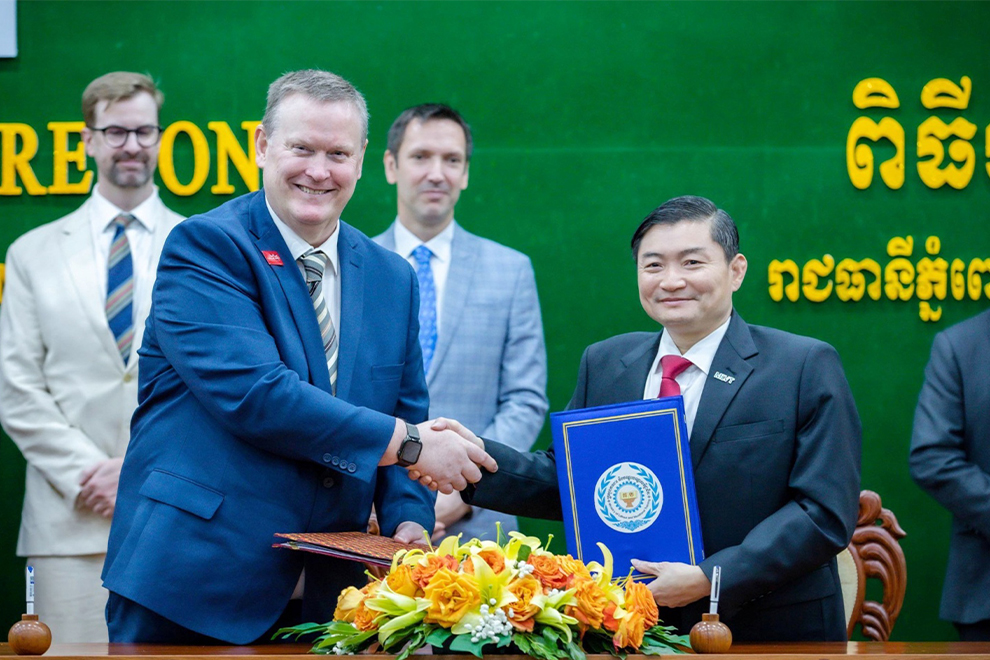
Cambodia and the United Kingdom have formalized a new phase of cooperation on workforce development, signing a memorandum of understanding focused on technical and vocational education and training (TVET). The agreement, signed at Cambodia’s Ministry of Labour and Vocational Training on March 9, 2026, sets out a three-year framework for exchange and collaboration between Cambodian institutions and the UK Skills Partnership (UKSP). The signing was conducted by Labour Minister Heng Sour and Jonathan Ledger, who represented the UK Skills Partnership as an international specialist in TVET and labour-market policy.
According to the ministry’s description of the arrangement, the MoU is designed around reciprocity, sustainability and mutual benefit, and aims to strengthen practical cooperation rather than symbolic engagement. At its core, the agreement prioritizes technical skills development and institutional learning. Cambodian and UK partners are expected to share approaches, discuss policy and training models, and support programme delivery that can improve workforce quality.
Officials indicated that this cooperation is intended to help align training outcomes with the needs of the private sector, a recurring policy challenge in developing labour markets where skill demand can shift faster than curricula. The ministry said the partnership is also expected to generate value through knowledge exchange. This includes structured discussions on how investment in skills can improve productivity and competitiveness, as well as collaboration on innovation in training quality.
In practical terms, that means not only expanding access to training, but also improving the relevance and standards of training systems so graduates are better prepared for real employment pathways. Minister Heng Sour linked the MoU to broader labour-governance and human-capital priorities in Cambodia. He thanked UK representatives for continued support across a range of areas, including scholarships, migrant worker protection, policy support and vocational training.
He also referenced wider UK engagement in trade, investment and education-related cooperation, noting that these areas are increasingly important as Cambodia enters a more advanced stage of economic transition. The UK side likewise framed education and skills as central to Cambodia’s next development chapter. During discussions around the signing, UK Ambassador Dominic Williams said improving skills will be especially important as Cambodia prepares to graduate from Least Developed Country (LDC) status in coming years.
Higher skill levels, he noted, are essential for labour productivity and for building higher-potential sectors that can support continued growth after graduation. Both sides presented the MoU as part of a longer-term bilateral relationship rather than a one-off technical project. The meeting included broader exchanges on strengthening Cambodia-UK ties, with a shared emphasis on continuity and practical outcomes.
Officials highlighted the role of training partnerships in connecting local systems with international expertise and in introducing world-class programmes in ways that can be adapted to local needs. While the MoU itself is a framework rather than a detailed public implementation plan, its stated direction is clear: build a more skilled workforce, improve training quality, and use skills policy as an economic enabler. If implemented consistently over the three-year term, the partnership could contribute to stronger alignment between education and employment, which remains a central factor in Cambodia’s long-term competitiveness and social well-being.
Source: Phnom Penh Post