
Opinion piece links US-Israel actions in Iran and Venezuela to wider China strategy
A Phnom Penh Post opinion article argues that recent US and Israeli operations in Iran and Venezuela are part of a broader strategy to constrain China's access to discounted energy and reduce nuclear risk in the Middle East.
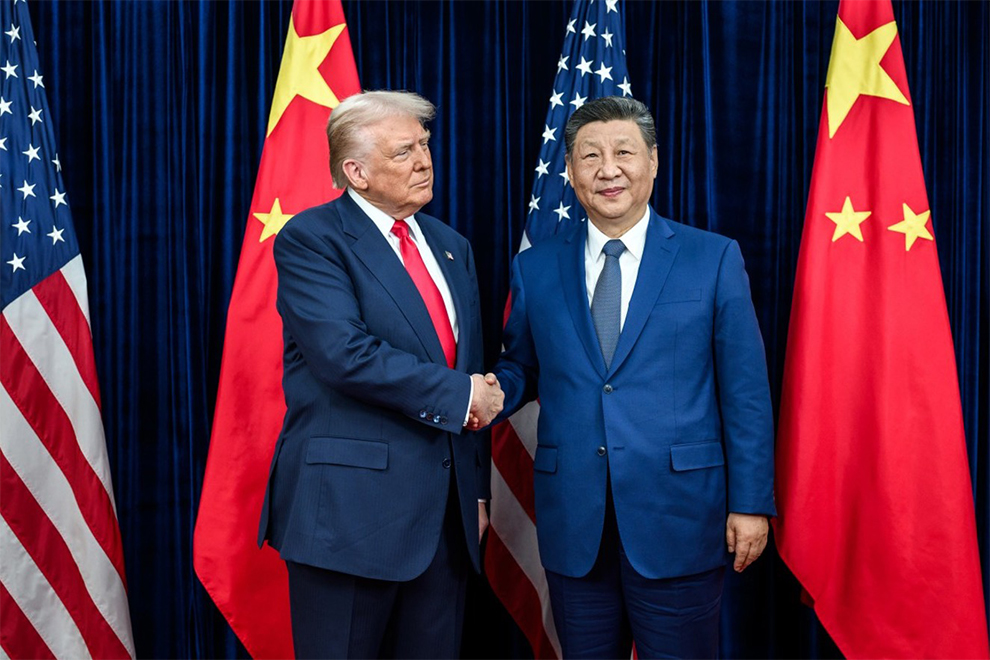
A commentary published by The Phnom Penh Post presents a broad geopolitical argument connecting recent US and Israeli actions in Iran and Venezuela to long-term strategic competition with China. The article, written as opinion, frames these developments as part of what it describes as a coordinated effort to restrict China's access to discounted oil supplies while also preventing Iran from reaching a stronger nuclear threshold. According to the commentary, Beijing has relied in part on sanctioned or discounted oil flows, particularly from Iran and Venezuela, to support industrial demand.
The author argues that by pressuring or disrupting these channels, Washington can force China to buy more energy at open-market prices, often in US dollars, increasing import costs and potentially tightening pressure on foreign-exchange resources. The piece treats this as both an economic and currency issue, linking energy trade patterns to broader competition between dollar-based and yuan-based settlement systems. The article also places heavy emphasis on military and security calculations around Iran.
It argues that US and Israeli strikes were intended to avoid what it calls a "North Korea trap"—a scenario in which a state reaches a more protected nuclear status that becomes significantly harder to roll back by force. In the author's view, acting earlier is intended to reduce future deterrence barriers and prevent the emergence of a durable nuclear standoff in the region. In this framing, the operations in Venezuela and Iran are not presented as isolated events.
Instead, the author describes them as two fronts of one strategic pressure campaign: one focused on global energy supply alignment and one focused on non-proliferation through preemptive military pressure. The commentary further suggests that such moves are meant to send a wider signal to other governments that strategic partnerships and nuclear hedging may not provide long-term security guarantees under high-intensity confrontation. Because this is an opinion essay, many of its claims are interpretive and reflect the writer's analysis rather than independently verified findings from governments or multilateral institutions.
Still, the argument captures a policy debate that has become increasingly prominent: whether energy market control, sanctions architecture, and military timing are now being used in an integrated way across multiple theaters. The article concludes that, as of early March 2026, these developments collectively increase pressure on Beijing while reshaping security dynamics around Iran. Whether that pressure produces durable strategic outcomes remains uncertain.
Much depends on how affected states adapt—through new supply routes, diplomatic realignment, domestic economic adjustment, or escalation management. What is clear is that energy security, currency influence, and proliferation risks are being discussed together more often than in past cycles of great-power rivalry.
Source: Phnom Penh Post